
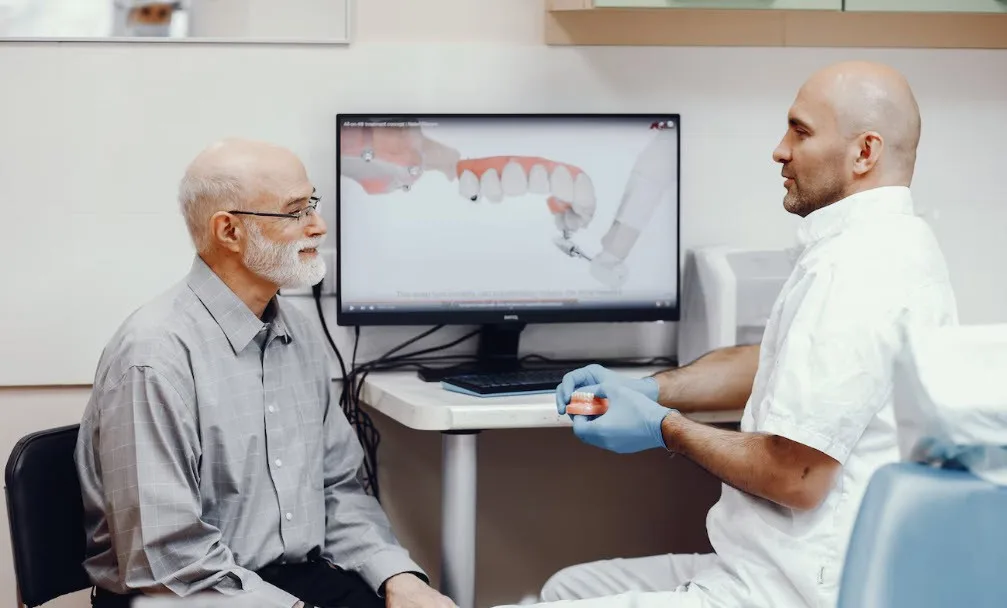
 If you have lost even a single tooth, it can reduce the functionalities and aesthetics of your smile. At Edmonds Dental Studio, we offer guided implant surgery that can help your smile regain its former glory!
Guided Implant Surgery Edmonds, WA
If you have lost even a single tooth, it can reduce the functionalities and aesthetics of your smile. At Edmonds Dental Studio, we offer guided implant surgery that can help your smile regain its former glory!
Why Choose Guided Implant Surgery
Benefits of Guided Implant Surgery
Guided implant surgery plans your treatment before it begins. A 3D cone beam CT (CBCT) scan and a digital scan of your mouth are combined into a virtual plan that maps the exact position, angle, and depth of each implant. That plan is transferred to a custom surgical guide, so placement follows a design created in advance rather than being judged entirely during surgery.
Precise, Pre-Planned Placement
CBCT 3D imaging and digital planning position each implant before surgery, and a custom surgical guide carries that plan into the mouth for accurate placement.
Often Less Invasive
Because the site is mapped in advance, placement can be more targeted and, in suitable cases, more conservative. A digital scanner can also replace uncomfortable putty impressions.
Greater Predictability
Planning the implant position, abutment, and space for the final crown ahead of time supports a predictable result and helps reduce the risk of surprises during treatment.
Efficient, Comfortable Visits
A digital, plan-first workflow can streamline treatment and, in some cases, reduce the number of appointments needed to move from planning to placement.
Common Questions
Guided Implant Surgery FAQ
Guided implant surgery is a computer-planned approach to placing dental implants. A 3D cone beam CT (CBCT) scan and a digital scan of your mouth are used to map the ideal position, angle, and depth of each implant before surgery. That plan is transferred to a custom surgical guide that directs the placement, so the implant follows the position designed in advance.
In a traditional approach the implant position is judged largely during surgery. With guided surgery the placement is planned in 3D beforehand and carried out with a custom surgical guide, which supports greater precision and predictability. Digital intraoral scanning can also replace conventional putty impressions for a more comfortable experience.
Because the implant site is mapped in advance, guided surgery is often more targeted and, in suitable cases, can be performed with a smaller, more conservative surgical approach. Many patients find the planning-first workflow more comfortable, though the exact technique depends on your bone, gum health, and treatment plan.
A more precise, minimally invasive placement can be associated with a smoother recovery for some patients. Healing still involves osseointegration, where the implant fuses with the jawbone over a period of months. Individual recovery varies with the treatment site, bone quality, and overall health.
Candidacy is determined from a 3D CBCT scan and an evaluation of your bone volume and gum health. When bone is limited, procedures such as bone grafting may be planned first. Factors like uncontrolled diabetes, active gum disease, and smoking can affect healing, so a consultation with imaging is used to confirm whether guided surgery is right for you.
Schedule Your Visit
Edmonds Dental Studio — Advanced Implant & Cosmetic Dentistry in Edmonds, WA. Call or request an appointment today.