 Gum disease, tooth decay, old age, and accidents are just some reasons why you may end up losing multiple missing teeth. Whatever the reason may be, you no longer have to feel conscious about the missing teeth for the rest of your life. There are multiple procedures that one can opt for to replace the missing teeth and restore your jaw's full-functionality.
Dr. Hasan Dbouk and his team at Edmonds Dental Studio can not only replace multiple missing teeth but also improve your smile’s aesthetics. We offer a number of restorative dentistry procedures, and each comes with its own set of pros and cons that we shall discuss below.
Gum disease, tooth decay, old age, and accidents are just some reasons why you may end up losing multiple missing teeth. Whatever the reason may be, you no longer have to feel conscious about the missing teeth for the rest of your life. There are multiple procedures that one can opt for to replace the missing teeth and restore your jaw's full-functionality.
Dr. Hasan Dbouk and his team at Edmonds Dental Studio can not only replace multiple missing teeth but also improve your smile’s aesthetics. We offer a number of restorative dentistry procedures, and each comes with its own set of pros and cons that we shall discuss below.
Replacing Multiple Teeth Edmonds, WA
Gum disease, tooth decay, old age, and accidents are just some reasons why you may end up losing multiple missing teeth. Whatever the reason may be, you no longer have to feel conscious about the missing teeth for the rest of your life. There are multiple procedures that one can opt for to replace the missing teeth and restore your jaw's full-functionality.
Dr. Hasan Dbouk and his team at Edmonds Dental Studio can not only replace multiple missing teeth but also improve your smile’s aesthetics. We offer a number of restorative dentistry procedures, and each comes with its own set of pros and cons that we shall discuss below.
Why Replace Missing Teeth
Benefits of Replacing Multiple Teeth
Losing several teeth affects far more than your smile — it changes how you chew, speak, and how your jawbone holds its shape over time. Replacing multiple teeth, whether with individual implants, an implant-supported bridge, or a partial denture, is designed to restore day-to-day function and help protect the structures that support your remaining teeth.
Restores Full Chewing Function
Filling several gaps at once returns efficient, comfortable chewing across the arch, so you can eat a wider range of foods without working around missing teeth.
Preserves Jawbone & Facial Structure
Implants and implant-supported bridges stimulate the jaw like natural tooth roots, helping to reduce the bone loss that commonly follows the loss of several teeth.
Fewer Implants Than Teeth
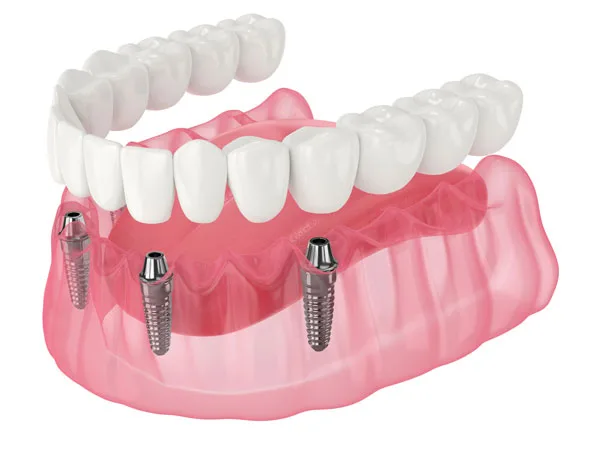
When teeth are missing in a row, an implant-supported bridge can replace several teeth using fewer implants — protecting the jawbone rather than crowding it with side-by-side posts.
Stable, Low-Maintenance Options
Fixed implant solutions stay firmly in place instead of shifting like some removable appliances, and they are cared for much like natural teeth with brushing and routine checkups.
Common Questions
Replacing Multiple Teeth FAQ
Common options include an implant-supported bridge, several individual dental implants, or a removable partial denture. An implant-supported bridge replaces teeth in a row using fewer implants than missing teeth, individual implants suit gaps in different areas of the mouth, and a removable partial denture is a non-surgical, more affordable alternative. Each option has trade-offs in cost, stability, and bone preservation that are reviewed at a consultation.
No. When teeth are missing in a row, an implant-supported bridge can replace several teeth using fewer implants than teeth — for example, two implants can commonly support a three- to four-tooth bridge. Placing individual implants directly side by side for every missing tooth can compromise the jawbone’s integrity, so a bridge is often used instead.
An implant-supported bridge is fixed in place, anchored to titanium implants that fuse with the jawbone, so it stays put while you eat and speak and helps preserve bone. A removable partial denture rests on the gums and remaining teeth and can be taken out; it is more affordable and non-surgical but is generally less stable, may affect speech at first, and requires a maintenance routine.
Implant-based solutions, including individual implants and implant-supported bridges, transmit chewing forces into the jaw much like natural tooth roots, which helps reduce the bone resorption that typically follows tooth loss. Removable partial dentures rest on top of the gums and do not stimulate the underlying bone in the same way, so bone can continue to shrink over time.
Timelines vary with the treatment chosen and your individual healing. Implant-based solutions require an osseointegration period for the implant to fuse with the bone, which commonly takes several months before the final bridge or crowns are placed, and treating multiple sites can extend this further. A removable partial denture can usually be completed sooner. Schedule a consultation with imaging to map out your personal timeline.
Schedule Your Visit
Edmonds Dental Studio — Advanced Implant & Cosmetic Dentistry in Edmonds, WA. Call or request an appointment today.